Sunday, May 12, 2019

Wolmido Island - 1 of the Top 100 Must-Visit Tourist Spots in Korea for 2019


Wolmido Island (월미도), located roughly 1km off the coast of Incheon, has since become part of the mainland with the creation of a new highway. The name Wolmido Island comes from the shape of the island as it resembles the tail of a half moon. Thanks to its location near Seoul and the convenient transportation, many people visit here during weekends. 


The Culture Street starts with Doodle Pillar, and continues onward to Meeting Square, Arts Square, Performance Square, Good Harvest Square and several other notable highlights. Throughout these areas, spontaneous performances are performed, and street artists can draw for you on the spot. Moreover, many cafes and seafood restaurants are lined along the coast so you can enjoy coffee or fresh seafood while viewing the sea. 


A must-see attraction on Wolmido Island is "Play Hill." It’s not as large as other theme parks in Korea, but the Apollo Disco and the Viking rides are truly thrilling. If you're not into rides, the Apollo Disco ride is still fun just watching. You can also get on a cruise to look around the island.


For more info, please visit:
https://bit.ly/2HzFRiZ


📷credit: Visit Korea

#KoreaForAllSeasons #VisitKorea #KFYSupporters2019

Friday, May 10, 2019

Lotte World - 1 of the Top 100 Must-Visit Tourist Spots in Korea for 2019


Operated by Lotte Group, Lotte World is the perfect spot for entertainment and sightseeing for Koreans and international tourists alike. 


It is a theme park filled with thrilling rides, an ice rink and different kinds of parades, as well as a folk museum, a lake, accommodations, department stores and more. Lotte World is divided into Lotte World Adventure, a world themed indoor area, and Magic Island theme outdoors, next to Seokchonhosu Lake.


Lotte World Adventure has districts representing different countries with various kinds of facilities and souvenir shops. You can enjoy watching parades, numerous films, laser shows, and tasting a variety of international cuisines year-round. Lotte World Adventure is the largest indoor amusement park in the world. 


The Folk Museum is also one of the most popular museums among international visitors. Folk cultural items on display date back 5,000 years in Korean history. The museum also features miniature villages and a playground. The museum layout was arranged to attract visitors' attention and the displays are easily understandable. In addition, audio-visual devices are provided to make one's visit even more enjoyable. Lotte World Garden Stage presents various themed musicals to match each season and Lotte World Star Avenue is the perfect place to experience Korean stars and the entertainment world.


📷credit by: Visit Korea
 #KoreaForAllSeasons #VisitKorea #KFYSupporters2019 #KTO #KTOManila #Korea

Changdeokgung Palace - 1 of the Top 100 Must-Visit Tourist Spots in Korea for 2019


Changdeokgung Palace was the second royal villa built following the construction of Gyeongbukgung Palace in 1405. It was the principal palace for many kings of the Joseon Dynasty, and is the most well-preserved of the five remaining royal Joseon palaces.

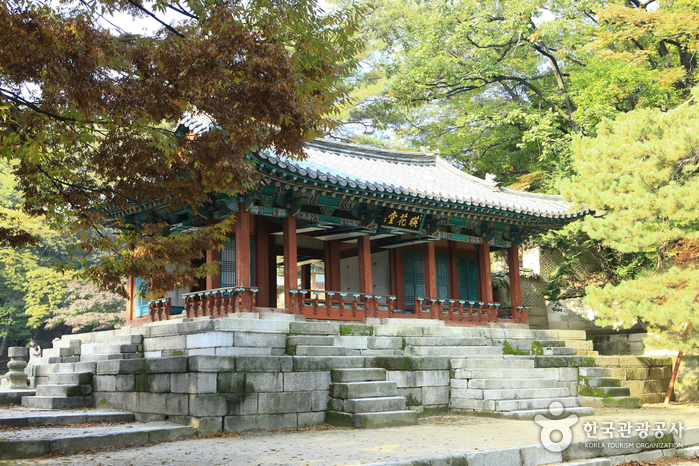
The palace grounds are comprised of a public palace area, a royal family residence building, and the rear garden. Known as a place of rest for the kings, the rear garden boasts a gigantic tree that is over 300 years old, a small pond and a pavilion.
The palace gained importance starting from the time of Seongjong, the 9th king of Joseon, when a number of kings began using it as a place of residence. Unfortunately, the palace was burned down by angry citizens in 1592 when the royal family fled their abode during the Japanese invasion of Korea. Thanks to Gwanghaegun, the palace was restored in 1611.

Even today, it houses a number of cultural treasures, such as Injeongjeon Hall, Daejojeon Hall, Seonjeongjeon Hall, and Nakseonjae. Changdeokgung Palace’s rear garden was constructed during the reign of King Taejong and served as a resting place for the royal family members. The garden had formerly been called Bukwon and Geumwon, but was renamed Biwon after King Kojong came into power. The garden was kept as natural as possible and was touched by human hands only when absolutely necessary. Buyongjeong, Buyongji, Juhabru, Eosumun, Yeonghwadang, Bullomun, Aeryeonjeong, and Yeongyeongdang are some of the many pavilions and fountains that occupy the garden.


 The most beautiful time to see the garden is during the fall when the autumn foliage is at its peak and the leaves have just started to fall.


 Though it has been treasured by Koreans for centuries, Changdeokgung Palace was recognized as a World Cultural Heritage site by the UNESCO World Cultural Heritage Committee in December of 1997 during the committee meeting in Naples, Italy. Changdeokgung Palace was one of the places visited by the first ladies of the Seoul G20 summit during the G20 conference in Seoul in November 2010.

It is one of the most historically significant attractions that represent the beauty of Korea.


 📷credit by: Pixabay & Visit Korea #KoreaForAllSeasons #VisitKorea #KFYSupporters2019 #KTO #KTOManila #Korea

Thursday, May 9, 2019

Gyeongbokgung Palace - 1 of the Top 100 Must-Visit Tourist Spots in Korea for 2019


Built in 1395, Gyeongbokgung Palace is also commonly referred to as the Northern Palace because its location is furthest north when compared to the neighboring palaces of Changdeokgung (Eastern Palace) and Gyeonghuigung (Western Palace) Palace. Gyeongbokgung Palace is arguably the most beautiful, and remains the largest of all five palaces. 

The premises were once destroyed by fire during the Imjin War (Japanese Invasions, 1592-1598). However, all of the palace buildings were later restored under the leadership of Heungseondaewongun during the reign of King Gojong (1852-1919). 


Remarkably, the most representative edifices of the Joseon Dynasty, Gyeonghoeru Pavilion and Hyangwonjeong Pond have remained relatively intact. Woldae and the sculptures of Geunjeongjeon (The Royal Audience Chamber) represent past sculptures of contemporary art. 

The National Palace Museum of Korea is located south of Heungnyemun Gate, and the National Folk Museum is located on the eastern side within Hyangwonjeong.


📷credit by: Pixabay & Visit Korea
#KoreaForAllSeasons #VisitKorea #KFYSupporters2019 #KTO #KTOManila #Korea